What Every DIY Enthusiast Needs To Know About Roofs!
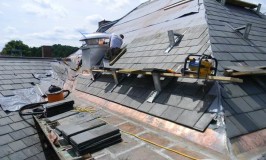
What Every DIY Enthusiast Needs To Know About Roofs 1Installing slate tiles on a roof – Photo Courtesy: Groton School


So, you’re thinking of putting a new roof on your house – are you? Well, you are very brave! While reroofing a house is not for the faint-hearted, it can also be very satisfying and save you a lot of money. So it pays to get it right really, doesn’t it?! There are experts out there who can do it for you but if you think you know a thing or two about DIY then you may be contemplating doing the job yourself.

Before you get stuck in, it’s important that you really think it through. And it all starts with deciding which material to opt for. There are many ways to reroof a house – make sure you choose a way that will suit your house. In this article we’ll list the common types of roofing material so you can start to consider which will be best for you:


Tiles


What Every DIY Enthusiast Needs To Know About Roofs 2

Roof of a home in in Guardistallo, Tuscany, Italy – Photo Courtesy: Conan


Tiles cost a lot more than other sorts of roof material but they last a lot longer, so take this into account when you are looking at costs. Roof tiles look stylish and are in keeping with older looking houses. Tile is extremely economical in other ways too as it is so efficient at insulating. They are weather-proof and waterproof but they are not for walking on! It’s an expensive choice but one that will keep your house looking beautiful for many years to come.


Flat Roofing


What Every DIY Enthusiast Needs To Know About Roofs 3

Building with flat roof in Pearl, Portland, Oregon, USA – Photo Courtesy: Sam Churchill


Used more for garages and industrial units, flat roofs are a cheap and easy option to keep your unit weatherproof. They are layers of molten asphalt and covered with a membrane of plastic or rubber. They’re not beautiful, and they do have a reputation for leaking more often than other materials, but they are relatively cheap and easy to fit. But you’ll need an expert.


Thatch


What Every DIY Enthusiast Needs To Know About Roofs 4 Look at this BEAUTIFUL ‘Pencil Cottage’ with a thatched roof – One of the many thatched houses in Shanklin Old Village on the Isle of Wight, England. The old village of Shanklin is famous for its thatched houses. Photo Courtesy: Garry Knight

Thatched roofs set off any house beautifully, but they come at a price! They are very expensive to install (and have to be done by an expert). There’s no doubt that they add charm to any house; however, the main drawback apart from the price seems to be that they are very flammable, therefore increasing your risk of a house fire. Those with thatched roofs have to make sure they have a robust evacuation procedure in case of fire.


Aluminium


What Every DIY Enthusiast Needs To Know About Roofs 5

Photo Courtesy: Steve Snodgrass


Aluminium roofs are durable and weather resistant and are becoming a more and more popular choice.  Aluminium doesn’t warp, rust or crack and it is not flammable, meaning it is very safe. If you live in an area which is prone to hailstorms then it’s a great choice and if you live on the coast then the aluminium won’t be corroded by the salty air. It’s a very lightweight material and quite cheap to install.


Whichever method of roofing you employ, it’s vital that you get it right the first time unless you want years of repair works and bills ahead of you. So spend some time researching and deciding on which material is right for you and then only get roofing!


Jenny Anderson, a roofing expert, works with a premier roof repairs firm O’Boyles Roof Plumbing. A swimming enthusiast, Jenny enjoys reading novels and baking cakes in her free time.

Share

Do It Yourself Home Improvement Tips and Tricks: Dos and Don’ts

Do It Yourself Home Improvement Tips and Tricks - Dos and Don'ts 1A beautiful homemade chandelier by John Mills for his living room. Photo Courtesy: John Mills

Home improvements can seem very intimidating when looking at the whole picture but they definitely don’t have to be. At the end of the day, the most important thing is that your home is looking the way you want it to. Don’t think you are required to spend all of your savings or make complete renovations to create a new vibe or feeling in your home. Sometimes there are little things you can do that are going to be just as beneficial, if not more so (due to cost and time saved), for not only the look of your home but also for your family’s enjoyment.


Avoid Becoming Overwhelmed: Start Simple


Do: Focus on the small things. How can you make your living room better? Trying to make it pop? Why not add a few photos of your family, your pets and personal items such as those beautiful creations your children have brought home from school. Take your personality and your character, whatever it is that makes you unique and shows off what makes your family fun and unique.

Don’t: Look too far ahead. Looking into the future is an important step to any part of life but the last thing you want to do is stress yourself out. Taking things one step at a time, one day at a time, is what is going to get you the best results.


Do It Yourself Home Improvement Tips and Tricks - Dos and Don'ts 2Painting the Shed: This shed, actually a garage, was in dire need of paint, as you can see from the insert … not only was the old colour innsipid but the paint was peeling and dirty … so, after 12 days of scraping, sanding, priming and painting (2 coats) and voila! -  A new shed.

Photo Courtesy: R. A. Paterson

For example, if you are trying to add an outdoor room, break the project up into easy-to-handle sections. Start by focusing on just the planning of the space itself. What are your dimensions? How many people do you think you want to be able to hold? What types of things do you plan to store there? These are all questions to get you started. Then, you can start working out the exact details such as which type of material you’d like to use and getting everything inside.


Change is Everything and Means Everything


Do It Yourself Home Improvement Tips and Tricks - Dos and Don'ts 3

Heather and Tim’s living room, in their home in Comox-Strathcona, British Columbia, Canada is comfortable and filled with antiques, family heirlooms and local art. Photo Courtesy: Daryl Mitchell


Do: Take time to think of ways that you can mix up the setup of your home, because let’s face it; looking at the same four walls day in and day out can get really old, really fast. If you notice yourself just not wanting to get up in the morning or losing your motivation to clean up or exercise, it may be time to change your scenery.

Don’t: Stress over the changes you plan on making. Maybe all you really need to do is rotate items that are in your home currently with things that have been packed away for a while; like that family heirloom your mother was always worried about you breaking as a child.


A Low Budget Makes Only a Slight Difference in the Long Run


Do It Yourself Home Improvement Tips and Tricks - Dos and Don'ts 4

Rummage Sale – The Missouri River Relief rummage sale offering everything from old VHS tapes to lamps on Friday, June 1, 2012 to raise money for cleaning up the banks of the “Big Muddy.” Photo Courtesy: KOMUnews


Do: Take the time to budget yourself even if you have the money to spare because over the long term, the money you saved can be used for other household necessities. Saving a mere 5 dollars a month turns into $60 in a year’s time.

Don’t: Worry about how much money you make or how much you have to spare. Even if you have nothing extra, you can still add something new to your home. Start by checking out garage sales and thrift stores. Sometimes you can get items nearly (or completely) free.


Jack Marsh is a retired real estate agent. He has been freelancing for the website australianheritagehomes.com.au for the past two years.

Share

3 Top Tips for Painting a Room

3 Top Tips for Painting a Room 1Top left: A room before new paint. Top Right: The room during the painting. Above Bottom: The room after painting completed. All Photos Courtesy: Chris & Family

As far as DIY projects are concerned, painting the home interior is definitely the most popular choice with homeowners. It’s probably because unlike many other projects, you do not need to have a specialized set of skills to carry out the task. Indeed, it often ends up being a family affair in many homes; an activity in which the entire family can take part and help save money. Painting a room is not the most challenging of tasks if done correctly. However, ignore the basic rules and you could get it horribly wrong. Here are 3 top tips from home improvement experts that will help ensure that your painting project goes off without a hitch.


Never fail to prep a room properly


3 Top Tips for Painting a Room 2

Tami’s living room walls’ prep for painting painstakingly done by Glenn fixing the cracks in the walls – Photo Courtesy: Tami Hills

Quite often, the biggest mistake people make when undertaking a DIY painting project is to not prep the room properly. As any painting contractor can tell you, if you do not prep the walls properly before applying the paint, the end result will be far from pleasing. Even if there are no visual cues immediately noticeable, there will be problems in the future; problems such as peeling and cracking paint. Prepping the room is the only opportunity you will get to fix any flaws in the walls, including cracks. Scraping does require some time and effort, but do not dare forgo it if the walls do require it.


Use masking tape judiciously


3 Top Tips for Painting a Room 3

You will come across many sites that will advice you against using masking tape. Their argument is that if you use your paintbrush correctly, you do not need to spend all that extra money on masking tape. What they do not tell you is that if you are not a house painter by profession, you will have a tough time with the straight lines. Unless your name is Pablo Picasso or Vincent van Gogh, it is highly recommended that you stick to using masking tape, especially since they are not that expensive.


Right: Use masking tape judiciously – Photo Courtesy: Joanna Poe


Master the paintbrush and rollers


Very often, homeowners do the correct amount of prep work and do not mind paying more for good quality paint. However, they are still left disappointed by the end results. In such cases, the problem often lies not with the paint or the surface, but the manner in which the paint was applied. Take some time to master the various paintbrushes and rollers that you will be using. There are numerous videos available online that teach novices how to hold a paintbrush properly and various painting techniques that allow the painter to cover large areas within a few strokes. With proper technique, not only will the layers of paint look good, the room will be painted much more quickly and the fatigue factor is reduced as well.


3 Top Tips for Painting a Room 4

Photo Courtesy: Ken Mayer

Painting may not seem like the most fun home improvement activity, but it certainly is one that can be easily accomplished. The tips mentioned here may not seem like much, but the results of ignoring them can be quite disastrous. Follow these 3 simple tips from home improvement experts and be prepared to marvel at the wonderful painting job you can accomplish.


Jeff Fernandes is the writer of this guest post. He helps provide effective home improvement tips and suggests Boiler Servicing to give a longer life to your gas or oil boiler.

Share

5 Unusual DIY Flooring Ideas

5 Unusual DIY Flooring Ideas 1Sun Floor – Photo Courtesy: Mike

Anyone who has ever watched an episode of Grand Designs or spent any time online searching for alternative DIY designs will be well aware that there are some incredibly eccentric people out there who love to see items of all types, shapes and sizes turned into something incredible for their homes. There are hundreds of bizarre examples to choose from, and some of the more eclectic choices have come in the flooring industry. It has become a modern craze to do something a little different with your floor space, and one of the greatest things about most of these weird and wonderful designs is that almost all of them are eco-friendly alternatives to traditional forms of flooring that find a use for materials that might have just been discarded otherwise.


1. Whiskey Barrel Flooring


5 Unusual DIY Flooring Ideas 2

Whiskey Barrel Flooring by McKay Flooring

The whiskey barrel has become a popular choice in bars, restaurants and homes that want an old school, authentic look of solid oak that is unfinished and lived in. The Glasgow based flooring company McKay Flooring came up with the idea to turn this age old barrels into flooring, and it looks pretty spectacular to the eye. If you wanted to install a bar or games room in your home, this is what you would want to use for your floors.


2. Glass Flooring


5 Unusual DIY Flooring Ideas 3

A fabric shop installed clear glass floors so that the old streets of Jerusalem can be seen. – Photo by James Emery

If you want to go a little further into making your home or business look ultra-modern and very cool, having glass flooring installed on your mezzanine level or stairs will give the area a very sleek design. These glass tiles are 6 inches thick and completely reflective, meaning that when coupled with LED lighting, they can be used to alter the mood of a room.


3. Leather Flooring


5 Unusual DIY Flooring Ideas 4

A beautifully designed Leather and Wood floor by Seward Construction CO of Denver, Colorado.

A growing trend for incorporating leather flooring into living areas has emerged out of the blue and the signs are good that they will become more popular, especially in homes that require a smart and sophisticated look. Chocolate brown is the most chosen color so far, and the durability of the leather design has been praised amongst the owners that have fitted leather flooring into their homes. In America, there is one particular store that has created floor tiles out of leather belts. They are pretty expensive to get fitted, and probably lead to a lot of men walking around with looser trousers.


4. Radiated Heat Flooring


5 Unusual DIY Flooring Ideas 5

Radiant heat lines being laid in a room floor – Photo Courtesy: Donna

A very eco-friendly alternative to regular flooring is to have radiated heat flooring installed. The majority of the energy used to heat a home is lost because it is lost immediately. What radiant floors achieve is transferring the warmth directly to you as you come in contact with the floor. Not only is this very cool, it’s also a great way to keep your heating bills down, which is great for your pocket and the environment.


5. Optical Illusion Tiles and Carpets


5 Unusual DIY Flooring Ideas 6

Stairs? – Photo Courtesy: Christine und David Schmitt

The optical illusion tiles and carpets serve no purpose other than to bring a huge smile to the face of whoever sees them and to make geeks say ‘That’s cool!’ really loudly. It can be very confusing, but it can also be used as a cool marketing tool. A video game store in Paris uses an optical illusion carpet to give customers the floor of the illusion of being in a ‘vortex’. It is actually designed by drawing bent lines in a particular order, but messes with your head either way!


Daley


This article was written by Daley on behalf of Ecotile, a company specialising in durable and environmentally friendly flooring solutions.

Share

Central Heating: Radiators not hot enough?

Central Heating - Radiators not hot enough 1Photo Courtesy: Simon James

If you are like me, then you would have been revelling in the fact that your central heating has been off for the last few months of summer and your heating bills have subsequently been significantly reduced.

Sadly, we are slowly rolling back around to the time when we need to start considering turning our central heating systems back on. As the cold and wet weather comes back to the UK and elsewhere, we can expect to see an increase in central heating and plumbing issues. Good news for plumbers and heating engineers but sadly not such great news for us that have to pay for it to be fixed. One of the most common problems that are raised concerns radiators that simply aren’t reaching their optimum temperatures.


Trapped Air


If after turning your central heating back on you find that your radiators don’t seem to be heating the room in the same way that they previously were, it could be that there is air trapped in your central heating system. This is very common place and signified by cold patches felt in different areas of the radiator – frequently towards the top of the radiator.


Bleeding the Radiators


Central Heating - Radiators not hot enough 2

Radiator Key – Photo by Gurney

Before reaching for the yellow pages to look for your local plumber or heating engineer, if you are confident enough one thing you can try is bleeding the radiators. All you need is a Radiator key (available online in most online or high street retailers) and a towel or rag that you are prepared to get a bit wet.

With your central heating switched off, use the radiator key to slowly turn the radiator valve at the top of the radiator. As you do this you will hear a hissing sound as the air (that was blocking your radiator) escapes to be replaced by water. As soon as a little spurt of water escapes from the radiator valve, you know all the air has been replaced with water and it is time to tighten the valve.


Boiler Pressure


Central Heating - Radiators not hot enough 3

You then need to carry out the above process on all of the radiators across the house and once you have finished, go to your boiler and check that the boiler pressure is still retained. The boiler pressure is often signalled on the dial or display of the boiler (depending on what boiler you have), but if you want more confirmation please consult your boiler manual/instructions.

If the water pressure has dropped slightly you may need to re-pressurize it. Often you can reset your boiler or add more water to the boiler system to increase the pressure. Again, please consult your boiler user manual for more information.

Right: Phil checking his boiler pressure with a flashlight and the manufacturer’s manual in hands (wise thinking). Photo Courtesy: Phil and Pam Gradwell


Calling the Experts


If in doubt about any of the above, you may just need to concede defeat and ask the experts in the form of a heating engineer. However learning to bleed a radiator yourself is a valuable life skill that is certainly worth learning. It can save you a lot of time and money and will no doubt significantly reduce the stress levels in your home if your central heating ever stops working properly!


About the author: Tom Key works for Direct Heating Supplies, leading supplier of cheap boilers, including Worcester boilers and Vaillant boilers, and other heating and plumbing supplies.

Share